
What is the best position to sleep in for your heart?
By Andrew Davis
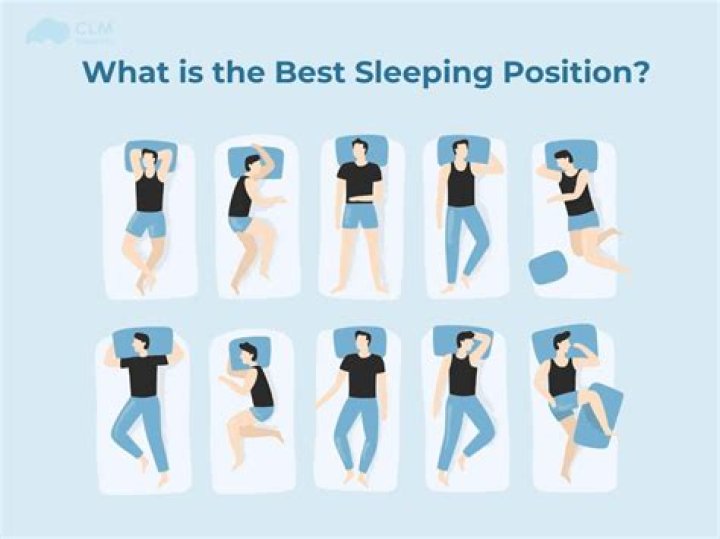
Sleeping on your right side may be the best option for people with heart failure. Although some people think sleeping on your right side could restrict blood flow back to the heart, there's not enough evidence to prove that it's harmful.
What is the best side to sleep on for your heart?
Similarly, sleeping on your left side, specifically, could help the flow of blood to your heart. When your heart pumps blood out to your body, it gets circulated and then flows back to your heart on the right side, Winter explains.
How should you sleep to avoid a heart attack?
Best Sleeping Positions for Those With Heart Problems
Those who have had heart failure or other heart conditions should sleep on their right side whenever possible. Right-side sleeping lets the heart rest in place with help from the mediastinum, preventing the disruption of your heart's electrical current.
What is the best sleeping position for heart failure?
Sleep on your side.
“In heart failure patients, lateral sleep positions on the side, left or right, can often decrease sleep apnea.” A bit of controversy surrounds whether the left or right side is best, says Khayat. If you have an implanted defibrillator, sleep on the opposite side.
What is the most healthy sleeping position?
Sleeping on your back offers the most health benefits. It protects your spine, and it can also help relieve hip and knee pain. Sleeping on your back uses gravity to keep your body in an even alignment over your spine. This can help reduce any unnecessary pressure on your back or joints.
37 related questions foundIs sleeping naked better for your health?
Sleeping naked together might improve your rest by reducing your stress and anxiety levels. Skin-to-skin contact between adults can increase levels of oxytocin, the “love hormone”. That increased oxytocin can help to reduce your stress levels. It can also make you feel more connected to your partner.
Why you should sleep on your left side?
According to Ayurvedic medicine, sleeping on your left side allows your body to better filter lymph fluid and waste via the lymph nodes as the left side of our body is the dominant lymphatic side. Western research has also found that sleeping on the left side can help the body process waste materials from the brain.
Does sleeping on my left side affect my heart?
Even though lying on your left side may change your heart's electrical activity, there's no evidence that it increases your risk of developing a heart condition if you don't already have one.
Are heart problems worse at night?
Studies have found that elevated nighttime blood pressure is tied to overall hypertension (high blood pressure). In fact, nocturnal blood pressure has been found to be even more predictive of heart problems than high blood pressure during the day.
Why do most heart attacks happen at night?
Why is the risk also higher during the last part of sleep? Usually, during the night, the cardiovascular system is "sleeping," which is characterized by low blood pressure and heart rate.
How do you stop a heart attack immediately?
Anyone who suspects they or someone they are with is having a heart attack should act fast by taking the following steps:
- Call 911. ...
- Take an aspirin. ...
- Take any prescribed chest pain medication. ...
- Open the door. ...
- Rest in a comfortable position and wait for the ambulance to arrive. ...
- Loosen tight clothing.
How should I sleep with chest pain?
Sleeping. Lie on your side with a pillow between your legs and your head elevated with pillows. Keep your back straight. Lie on your back with your head elevated and your knees bent, with a pillow under your knees.
Can drinking water prevent a heart attack?
Drinking a glass of water before bed prevents heart attacks and strokes. The American Heart Association, Centers for Disease Control and Prevention (CDC), along with other national health organizations, recommend several ways of decreasing your risk of a heart attack or stroke.
Can sleeping on your left side cause heart palpitations?
People who sleep on their side, in particular on the left side, may be more prone to heart palpitations at night. The reason for this is that the heart is right next to the chest wall, and the sensation reverberates.
How do you calm a racing heart?
If you think you're having an attack, try these to get your heartbeat back to normal:
- Breathe deeply. It will help you relax until your palpitations pass.
- Splash your face with cold water. It stimulates a nerve that controls your heart rate.
- Don't panic. Stress and anxiety will make your palpitations worse.
Can't sleep because heart is pounding?
Heart palpitations at night occur when you get the feeling of a strong pulse in your chest, neck, or head after you lay down to sleep. It's important to note that while these may be unsettling, they're usually normal and aren't typically a sign of anything more serious.
What do you do if your heart hurts at night?
If chest pain lasts for more than a few minutes, call 911 immediately. A person who suspects that they or someone else is having a heart attack should immediately call 911 or go straight to the emergency room. It is also advisable to see a doctor about any unexplained chest pain, even if it goes away on its own.
What 3 foods cardiologists say to avoid?
“Avoid any foods that have the words 'trans,' 'hydrogenated,' or 'partially hydrogenated' on the label [indicating bad fats], often found in commercially fried foods, donuts, cookies and potato chips,” advises Dr. DeVane. “Also, be aware of how many calories are coming from sugar.
What foods stop heart palpitations?
To increase your intake of calcium, eat more dark leafy greens and dairy products. Dark leafy greens are also a great source of magnesium, and so are nuts and fish. Most people get enough sodium in their diet with packaged foods such as deli meats and canned soups.
Why you shouldn't sleep on your left side?
A 2010 study of 10 participants found a relationship between laying on the right side and increased cases of heartburn (also known as GERD) than when laying on the left side. Researchers theorize that if we lie on the left side, the stomach and its gastric juices remain lower than the esophagus while we sleep.
Is sleeping on your left side healthy?
Sleeping on your left side is thought to have the most benefits to your overall health. Still, either side can offer benefits in terms of sleep apnea and chronic lower back pain relief. You don't have to stick with one side the entire night. Feel free to start on your left side and see how your body feels.
Which side you should not sleep?
A north-to-south body position is considered the worst direction. This is because the human head is considered to have a polar-like attraction, and it needs to face southward to attract opposite poles while you sleep.
Should you sleep with socks on?
Wearing socks to bed may help you fall asleep faster and snooze better during the night. Research shows that thawing out icy feet can adjust your body's core temperature to put restful ZZZs within reach.
What happens when you sleep with someone you love?
It has a good effect on your health
But sleeping next to the person you love, brings amazing benefits to your health. Sleeping with your partner lowers your stress and blood pressure, boosts your immune system, reduces anxiety, improves sleep quality, and reduces pain.
Is it better to sleep in a cold room?
Keeping your sleeping quarters at a temperature near 65°F (18.3°C), give or take a few degrees, is ideal. Your body's temperature decreases during sleep, and a cool, but not cold, room will help you settle into and maintain sleep throughout the night.